
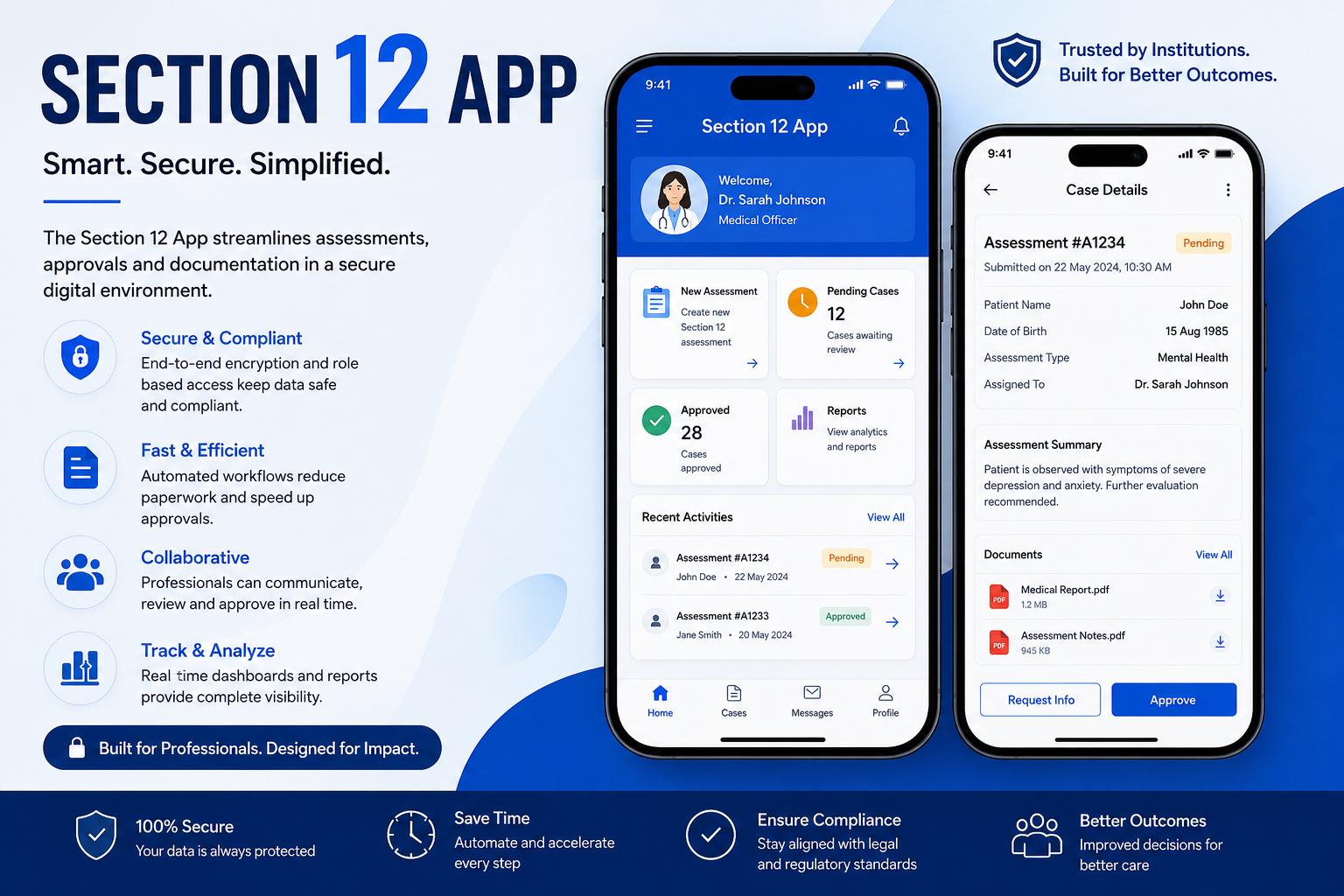
Introduction to Section 12 App
The concept of a section 12 app has gained increasing attention in recent years as digital transformation continues to reshape administrative, legal, and healthcare systems. At its core, a section 12 ap refers to a digital platform designed to simplify, manage, and support processes related to Section 12 authorizations, assessments, or applications within structured regulatory frameworks. While the exact meaning of section 12 can vary depending on jurisdiction and context, it is most commonly associated with legal and medical evaluation systems, particularly those involving mental health assessments and certified professional approvals.
In a world where efficiency, accuracy, and compliance are essential, the section 12 app plays a critical role in modernizing traditional paperwork-based procedures. It brings together professionals, institutions, and regulatory bodies into a unified digital environment. This shift not only reduces delays but also improves transparency and accountability across systems that were once heavily dependent on manual processes.
Understanding the section 12 app requires looking beyond just its technical structure. It is equally important to explore its purpose, functionality, and real-world applications. Whether used in healthcare, legal compliance, or administrative governance, the section 12 app represents a growing movement toward smarter digital ecosystems that prioritize accuracy and accessibility.
As we move deeper into this topic, we will explore what the actually is, how it functions, why it is important, and how it is shaping the future of digital administration systems.
Understanding What the Section 12 App Means
The section 12 app can be understood as a specialized digital solution built to streamline processes associated with Section 12 certifications or approvals. In many cases, Section 12 refers to legal provisions that require authorized professionals to assess and certify specific conditions or decisions. Traditionally, these processes involve significant paperwork, manual verification, and time-consuming communication between stakeholders.
The section 12 app replaces these outdated methods with a centralized digital system. It allows users such as doctors, administrators, and authorized personnel to submit, review, and manage applications efficiently. Instead of relying on physical documents, the entire workflow is handled electronically, ensuring faster processing and reduced chances of human error.
One of the defining aspects of the section 12 app is its structured workflow system. Every step of the process, from submission to approval, is tracked and recorded within the platform. This ensures that all actions are transparent and traceable, which is especially important in regulated environments where accountability is essential.
Another important element of the section 12 app is its adaptability. While the core function remains consistent, the app can be customized to suit different institutional requirements. This makes it suitable for hospitals, government departments, and private organizations that operate under Section 12 regulatory frameworks.
The Importance of Section 12 App in Modern Systems
The importance of the section 12 app lies in its ability to transform complex and time-sensitive processes into streamlined digital workflows. In traditional systems, Section 12 procedures often involve delays due to manual coordination between multiple parties. These delays can have serious consequences, especially in healthcare settings where timely decisions are critical.
The section 12 app addresses these challenges by enabling real-time communication and instant data sharing. Professionals no longer need to rely on physical paperwork or in-person meetings to complete assessments. Instead, they can access and update information instantly from anywhere, improving overall efficiency.
Another major importance of the section 12 app is its role in improving compliance. Regulatory frameworks often require strict documentation and audit trails. The app ensures that every action taken within the system is recorded, making it easier for institutions to demonstrate compliance during audits or inspections.
Additionally, the section 12 app enhances data security. Sensitive information related to assessments and authorizations is stored in secure digital environments, reducing the risk of loss, damage, or unauthorized access. This is particularly important in sectors like healthcare where confidentiality is a top priority.
The growing reliance on digital systems across industries further highlights the importance of the section 12 app. As organizations continue to modernize, tools like this become essential for maintaining efficiency, accuracy, and reliability in daily operations.
How the Section 12 App Works in Practice
To understand the functionality of the section 12 app, it is important to look at how it operates in real-world scenarios. The app typically begins with a digital submission process, where authorized users enter relevant information into the system. This may include patient details, assessment data, or regulatory documentation depending on the context of use.
Once the information is submitted, the section 12 app routes it to the appropriate authorities or reviewers. This automated routing system eliminates the need for manual coordination and ensures that applications reach the correct individuals without delay. The system is designed to follow predefined workflows that align with legal or institutional requirements.
After submission and routing, the review process begins. Authorized professionals can access the application through the app and conduct their evaluations. They can add comments, request additional information, or approve the application directly within the system. This interactive process ensures that communication remains clear and centralized.
The section 12 app also includes notification systems that keep all parties informed about the status of applications. Users receive updates when actions are required or when changes occur in the process. This reduces uncertainty and ensures that no step is overlooked.
Finally, once the process is completed, the section 12 app stores the entire record in a secure database. This creates a permanent audit trail that can be accessed for future reference if needed. This feature is particularly valuable in environments where documentation and accountability are essential.
Key Functional Elements of Section 12 App
The section 12 app is built around several functional components that work together to create a seamless user experience. One of the most important elements is the user management system. This system ensures that only authorized individuals can access specific features or data within the app.
Another key component is the workflow automation engine. This engine defines how applications move through different stages of the process. It ensures that tasks are assigned correctly and that deadlines are met without manual intervention.
Data management is also a central feature of the section 12 app. All information entered into the system is stored securely and organized in a structured format. This allows users to retrieve and analyze data easily when needed.
Communication tools are another essential part of the app. These tools allow users to exchange messages, share updates, and collaborate on cases without leaving the platform. This improves efficiency and reduces the need for external communication channels.
Reporting and analytics features also play a significant role in the section 12 app. These tools provide insights into system performance, application status, and workflow efficiency. Organizations can use this data to improve decision-making and optimize processes over time.
Real World Applications of Section 12 App
The section 12 app has a wide range of applications across different sectors. In healthcare, it is commonly used to manage mental health assessments and certifications. Professionals can use the app to evaluate patients, submit reports, and obtain necessary approvals in a structured and efficient manner.
In legal and administrative environments, the section 12 app supports compliance processes that require formal authorization. It ensures that all necessary documentation is properly recorded and that approvals are granted according to regulatory standards.
Educational institutions may also use versions of the section 12 app to manage student assessments or disciplinary procedures that require formal documentation and approval. The system helps maintain consistency and transparency in decision-making processes.
Government agencies benefit from the section 12 app by using it to streamline public service applications that fall under Section 12 regulations. This improves service delivery and reduces administrative workload.
Each of these applications demonstrates the versatility of the section 12 app and its ability to adapt to different operational requirements while maintaining a consistent focus on efficiency and compliance.
Benefits of Using Section 12 App
The section 12 app offers numerous benefits that make it an essential tool for modern organizations. One of the most significant advantages is improved efficiency. By automating workflows and reducing manual tasks, the app significantly speeds up the entire process.
Another major benefit is enhanced accuracy. Manual systems are often prone to errors due to human oversight, but the section 12 app minimizes these risks through structured digital workflows and validation checks.
The app also improves transparency by providing a clear record of all actions taken within the system. This makes it easier for organizations to track progress and ensure accountability at every stage.
Cost savings are another important benefit. By reducing paperwork, administrative overhead, and processing delays, organizations can significantly lower operational costs over time.
The section 12 app also enhances accessibility by allowing users to access the system remotely. This is particularly useful in situations where professionals need to review or approve applications from different locations.
Challenges and Limitations of Section 12 App
Despite its many advantages, the section 12 app also comes with certain challenges. One of the primary issues is the need for proper training. Users must understand how to navigate the system effectively to avoid errors and ensure smooth operation.
Another challenge is system integration. In some cases, organizations may struggle to integrate the section 12 app with existing infrastructure, leading to compatibility issues.
Data security is also a concern, as the app handles sensitive information. Ensuring robust cybersecurity measures is essential to protect against unauthorized access and data breaches.
Additionally, resistance to change can be a barrier to adoption. Some professionals may prefer traditional methods and be hesitant to transition to a digital system.
Technical issues such as system downtime or software bugs can also impact the performance of the section 12 app, highlighting the need for continuous maintenance and support.
Development and Design Considerations for Section 12 App
Developing a section 12 app requires careful planning and attention to detail. One of the key considerations is user experience design. The app must be intuitive and easy to use, even for individuals who may not be highly tech-savvy.
Scalability is another important factor. As organizations grow, the app must be able to handle increased workloads without compromising performance.
Security architecture is also critical in the development of the section 12 app. Developers must implement strong encryption, authentication, and access control mechanisms to protect sensitive data.
Customization capabilities are also essential, as different organizations may have unique requirements. The app should be flexible enough to adapt to various workflows and regulatory frameworks.
Finally, ongoing maintenance and updates are necessary to ensure that the section 12 app remains functional, secure, and aligned with evolving standards.
Future of Section 12 App in Digital Systems
The future of the section 12 app looks promising as digital transformation continues to accelerate across industries. With advancements in artificial intelligence and automation, future versions of the app are expected to become even more intelligent and efficient.
AI integration could enable predictive analysis, helping professionals make better decisions based on historical data and patterns. Automation could further reduce manual intervention, making processes faster and more reliable.
The section 12 app is also likely to become more mobile-friendly, allowing users to manage applications seamlessly from smartphones and tablets. This will further enhance accessibility and convenience.
As regulatory systems continue to evolve, the section 12 app will play an increasingly important role in ensuring compliance and efficiency. Its ability to adapt to changing requirements will make it a key component of future digital infrastructure.
Conclusion
The section 12 app represents a significant step forward in the digitization of structured legal, medical, and administrative processes. By replacing traditional manual systems with efficient digital workflows, it enhances accuracy, transparency, and speed.
Throughout this article, we have explored the meaning, functionality, importance, and applications of the section 12 app in detail. We have also examined its benefits, challenges, and future potential in a rapidly evolving digital landscape.
As organizations continue to adopt smarter technologies, the will remain a vital tool in ensuring efficient and compliant operations. Its ability to simplify complex processes while maintaining high standards of accuracy makes it an indispensable part of modern digital systems.
Leave a Reply