
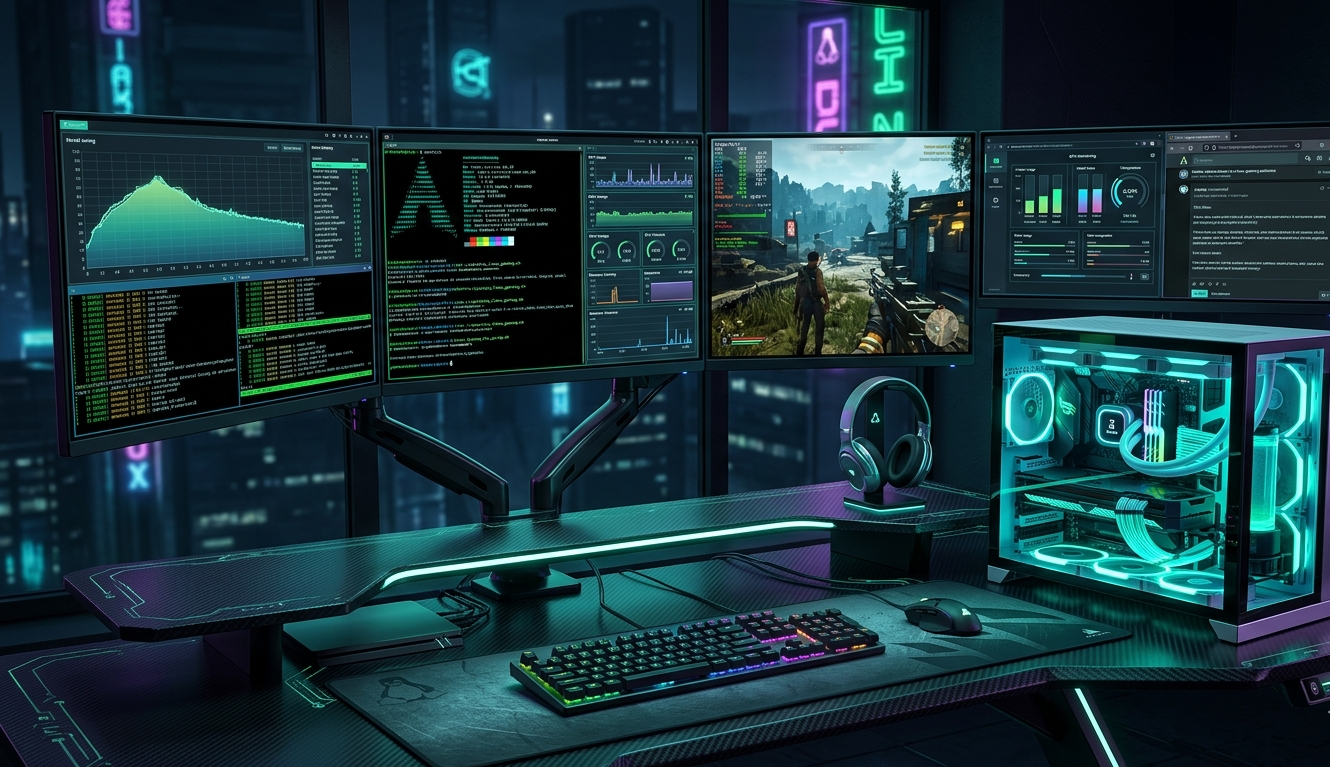
The world of PC gaming has evolved far beyond traditional operating systems and hardware setups, and Linux has steadily become a powerful platform for gamers who value performance, customization, and control. The concept of tech hacks pblinuxgaming represents a growing collection of techniques, optimizations, and system-level adjustments designed to improve gaming experiences on Linux-based systems. These tech hacks are not just about squeezing extra frames per second from hardware; they are about reshaping how the entire system behaves under gaming workloads, ensuring stability, responsiveness, and efficiency.
In the early days, Linux gaming was considered niche due to compatibility issues and limited developer support. However, the landscape has changed dramatically with the introduction of compatibility layers, improved drivers, and community-driven optimization tools. Today, tech hacks pblinuxgaming represents a blend of advanced system tuning, software compatibility enhancements, and hardware-level optimizations that empower gamers to achieve performance that rivals or even surpasses traditional gaming platforms.
This article explores the depth of these techniques in a structured and practical way. It focuses on how Linux systems can be transformed into high-performance gaming machines through thoughtful configuration, Tech Hacks PBLinuxGaming smart resource management, and strategic use of modern gaming tools. Whether you are a beginner exploring Linux gaming for the first time or an experienced user looking to refine your setup, understanding these tech hacks can significantly elevate your gaming experience.
Understanding Tech Hacks PBLinuxGaming in the Modern Gaming Ecosystem
Tech hacks pblinuxgaming is best understood as a philosophy rather than a single set of tools. It encompasses a wide range of methods that aim to improve gaming performance on Linux systems by modifying system behavior, optimizing hardware usage, and leveraging software compatibility layers.
Linux gaming has grown significantly due to community-driven innovation. Unlike closed ecosystems, Linux allows deep system-level access, which means users can fine-tune almost every aspect of performance. This flexibility is both a strength and a challenge because it requires understanding how different components interact under gaming workloads.
Modern Linux gaming relies heavily on compatibility technologies that bridge the gap between Windows-based games and Linux environments. These technologies translate system calls, manage graphics rendering pipelines, and ensure that games run smoothly without native Linux support. Tech hacks pblinuxgaming builds upon this foundation by optimizing how these layers operate, reducing overhead and improving execution efficiency.
Another important aspect of this concept is system responsiveness. Gaming is not just about graphics; it is about input latency, frame pacing, and consistent performance under load. Linux provides tools that allow users to adjust Tech Hacks PBLinuxGaming CPU scheduling, memory allocation, and GPU behavior in ways that are not typically possible on other operating systems. These adjustments form the backbone of advanced gaming optimization strategies.
System Optimization Techniques for Linux Gaming
System optimization is one of the most critical components of tech hacks pblinuxgaming. It involves fine-tuning the operating system to prioritize gaming performance over background processes and unnecessary system tasks.
CPU Optimization for Gaming Performance
The CPU plays a central role in gaming performance, especially in modern titles that rely heavily on physics calculations, AI processing, and background simulations. On Linux systems, CPU optimization involves managing how Tech Hacks PBLinuxGaming processes are scheduled and how resources are distributed among running applications.
One of the key strategies involves ensuring that the CPU governor is set to a performance-oriented mode. This allows the processor to maintain higher clock speeds consistently during gameplay instead of dynamically scaling down to save power. This approach reduces frame drops and improves consistency in performance-heavy scenes.
Another important aspect is process prioritization. Linux allows users to assign higher priority levels to gaming processes, ensuring that system resources are allocated efficiently. By reducing interference from background Tech Hacks PBLinuxGaming services, the CPU can dedicate more cycles to rendering and game logic.
NUMA balancing and core affinity adjustments also play a role in advanced CPU optimization. These techniques ensure that game threads are distributed across CPU cores in a way that minimizes latency and maximizes throughput.
GPU Optimization and Rendering Efficiency
The graphics processing unit is arguably the most important component for gaming performance. In Linux environments, GPU optimization is closely tied to driver configuration and rendering pipeline efficiency.
Modern Linux systems support both open-source and proprietary GPU drivers. Each has its strengths, and optimizing GPU performance often involves selecting the right driver and configuring it Tech Hacks PBLinuxGaming correctly for gaming workloads. Proper driver configuration ensures efficient shader compilation, texture handling, and frame rendering.
Vulkan, a modern graphics API, plays a significant role in Linux gaming optimization. It provides low-level access to the GPU, reducing overhead and improving performance compared to older APIs. Many tech hacks pblinuxgaming strategies focus on enabling Vulkan support and ensuring games utilize it whenever possible.
Frame pacing is another critical aspect of GPU optimization. Even when average FPS is high, inconsistent frame delivery can lead to stuttering. Adjusting synchronization settings and enabling appropriate buffering techniques helps maintain smooth gameplay.
Memory and Swap Optimization Techniques
Memory management is essential for maintaining stable gaming performance. Linux systems rely on both physical RAM and swap space to manage workloads. Improper configuration can lead to stuttering, slow load times, and system instability during gaming sessions.
Optimizing memory usage involves ensuring that sufficient RAM is available for gaming applications while minimizing background memory consumption. Disabling unnecessary services and reducing memory overhead from non-essential processes helps improve performance.
Swap configuration also plays a role. While swap is useful for preventing crashes, excessive reliance on it can degrade performance. Fine-tuning swap behavior ensures that it acts as a safety net rather than a primary memory source during gaming.
Software Layer Enhancements in Tech Hacks PBLinuxGaming
Software compatibility layers are a cornerstone of modern Linux gaming. These tools allow Windows-based games to run on Linux systems by translating system calls and managing graphical output.
Proton and Compatibility Layer Optimization
Proton has become one of the most important technologies in Linux gaming. It enables a large library of Windows games to run seamlessly on Linux through a compatibility layer that handles translation between Windows APIs and Linux system calls.
Optimizing Proton involves selecting the right version for specific games and adjusting configuration settings to improve compatibility. Different versions of Proton may offer better performance or stability depending on the game engine and hardware configuration.
Tech hacks pblinuxgaming often include experimenting with compatibility settings to reduce graphical glitches, improve frame rates, and enhance overall stability. These adjustments can make a significant difference in gameplay quality.
Wine Optimization for Enhanced Performance
Wine is another essential tool in the Linux gaming ecosystem. It provides a compatibility layer for running Windows applications and games by translating Windows API calls into POSIX-compliant system calls.
Optimizing Wine involves adjusting registry settings, enabling performance enhancements, and configuring graphical backends for better rendering efficiency. Proper Wine configuration can significantly reduce overhead and improve responsiveness.
Advanced users often fine-tune Wine environments for specific games, ensuring that each title runs under optimal conditions. This level of customization is a key part of tech hacks pblinuxgaming.
Game Launchers and Runtime Environments
Game launchers play an important role in managing libraries, updates, and configurations. On Linux, launchers such as Steam and Lutris provide structured environments for running games with optimized settings.
Configuring these launchers properly ensures that games utilize the best available compatibility layers and system resources. Runtime environments also help standardize dependencies, reducing compatibility issues across different distributions.
Kernel-Level Performance Enhancements
The Linux kernel is highly customizable, and kernel-level adjustments are among the most powerful tech hacks available for gaming optimization.
Low Latency Kernel Configuration
A low latency kernel is designed to reduce input lag and improve responsiveness. This is particularly important for competitive gaming, where reaction time is critical.
By reducing scheduling delays and prioritizing real-time processes, a low latency kernel ensures that game inputs are processed more quickly. This leads to smoother gameplay and improved control accuracy.
CPU Scheduler Tuning for Gaming Workloads
The Linux CPU scheduler determines how tasks are distributed across processor cores. Adjusting scheduler behavior can significantly improve gaming performance by prioritizing game-related processes.
Fine-tuning scheduler settings helps reduce background interference and ensures consistent performance during demanding gameplay scenarios. This is a crucial aspect of advanced Linux gaming optimization.
Graphics Driver Optimization Strategies
Graphics drivers are essential for translating game instructions into visual output. Optimizing these drivers is a major component of tech hacks pblinuxgaming.
NVIDIA Driver Optimization Techniques
NVIDIA GPUs are widely used in gaming systems, and Linux provides proprietary drivers that offer strong performance and feature support. Optimizing NVIDIA drivers involves adjusting settings related to power management, frame synchronization, and rendering behavior.
Disabling unnecessary visual enhancements and enabling performance-focused settings can significantly improve frame rates and reduce latency. Proper driver configuration ensures that games take full advantage of GPU capabilities.
AMD GPU Optimization on Linux
AMD GPUs benefit greatly from open-source driver support in Linux. The Mesa driver stack provides continuous improvements in performance and compatibility.
Optimizing AMD performance often involves ensuring that the latest Mesa versions are installed and configured correctly. These updates frequently include performance improvements for modern games and rendering techniques.
Mesa Graphics Stack Enhancements
The Mesa graphics stack is a key component of open-source GPU support. It provides Vulkan and OpenGL implementations that are critical for gaming performance.
Keeping Mesa updated and properly configured ensures that games run smoothly and efficiently across a wide range of hardware configurations.
Storage Optimization and Load Time Improvements
Storage performance has a direct impact on game loading times and asset streaming. Tech hacks pblinuxgaming includes several strategies to improve storage efficiency.
H3: SSD Optimization for Gaming
Solid-state drives provide significantly faster data access compared to traditional hard drives. Optimizing SSD performance involves ensuring proper alignment, enabling TRIM support, and minimizing unnecessary write operations.
These optimizations help maintain consistent load times and reduce in-game stuttering caused by asset streaming delays.
File System Selection and Configuration
The choice of file system can impact gaming performance. Linux offers several file system options, each with different performance characteristics.
Optimizing file system settings ensures efficient data retrieval and reduces latency during gameplay. Proper configuration can also improve system stability under heavy gaming workloads.
Network Optimization for Online Gaming
Online gaming performance depends heavily on network stability and latency. Tech hacks pblinuxgaming includes techniques to reduce ping and improve connection consistency.
Reducing network latency involves optimizing routing paths, prioritizing gaming traffic, and minimizing background network usage. These adjustments help ensure smooth multiplayer experiences without lag spikes or packet loss.
Automation and Scripting for Gaming Efficiency
Automation plays a significant role in advanced Linux gaming setups. Scripts can be used to optimize system settings automatically before launching games.
Custom scripts can adjust CPU governors, close background processes, and configure GPU settings dynamically. This ensures that the system enters a gaming-optimized state with minimal manual intervention.
Automation is a powerful aspect of tech hacks pblinuxgaming because it reduces complexity while maximizing performance consistency.
Troubleshooting Common Linux Gaming Issues
Despite optimizations, Linux gaming can sometimes encounter issues such as crashes, graphical glitches, or performance drops. Troubleshooting involves identifying the root cause and adjusting system configurations accordingly.
Common issues often relate to driver mismatches, compatibility layer misconfigurations, or insufficient system resources. Addressing these problems requires a systematic approach to isolating and resolving performance bottlenecks.
Advanced Optimization Strategies for Enthusiasts
Advanced users often explore deeper system modifications to push performance even further. These include custom kernel builds, overclocking, and advanced memory tuning.
These techniques require careful implementation but can result in significant performance improvements when executed correctly. They represent the highest level of tech hacks pblinuxgaming and are typically used by enthusiasts seeking maximum system efficiency.
Conclusion
Tech hacks pblinuxgaming represents a comprehensive approach to optimizing gaming performance on Linux systems through a combination of hardware tuning, software configuration, and system-level adjustments. It is not a single technique but rather an evolving ecosystem of strategies that continue to improve as Linux gaming technology advances.
By understanding and applying these optimization methods, users can transform their Linux systems into powerful gaming machines capable of delivering smooth, responsive, and high-performance gaming experiences. From kernel-level tweaks to GPU optimization and compatibility layer enhancements, every aspect of the system can be fine-tuned to achieve better results.
As Linux gaming continues to grow, the importance of these tech hacks will only increase, offering gamers more control, better performance, and a more customizable gaming environment than ever before.
Leave a Reply