
Introduction
In today’s digital education landscape, communication between schools and families has become more important than ever. Parents are no longer passive observers of their children’s academic journey. Instead, they are active participants who want real-time updates, transparent communication, and meaningful insights into both academic performance and classroom behaviour. One of the platforms that has significantly transformed Class Charts Parents this space is Class Charts, especially in how it supports parents in staying connected with their child’s school life.
The concept of Class Charts parents has gained strong attention because it bridges the gap between classroom activity and home awareness. It allows parents to understand not only how their child is performing academically but also how they are behaving, interacting, and progressing in real time. This kind of visibility was once difficult to achieve without regular teacher meetings or written reports that arrived weeks or months later.
This article provides a complete, in-depth explanation of Class Charts from a parent’s perspective. It explores how the system works, why it is important, and how it is reshaping modern education. It also offers practical insights into how parents can use it effectively to support their children’s development in a balanced and informed way.
What is Class Charts and How It Works for Parents
Class Charts is a digital classroom management and student tracking platform used by many schools to monitor behaviour, track academic progress, and improve communication between teachers, students, and parents. At its core, it transforms everyday Class Charts Parents classroom data into structured, accessible information that parents can view at any time.
Understanding the Platform
For parents, Class Charts functions as a window into the school environment. Teachers input information related to student behaviour, attendance, participation, and sometimes academic tasks. This data is then organised and displayed in a parent-friendly Class Charts Parents dashboard. The aim is not only to report problems but also to highlight achievements and positive behaviour in a structured way.
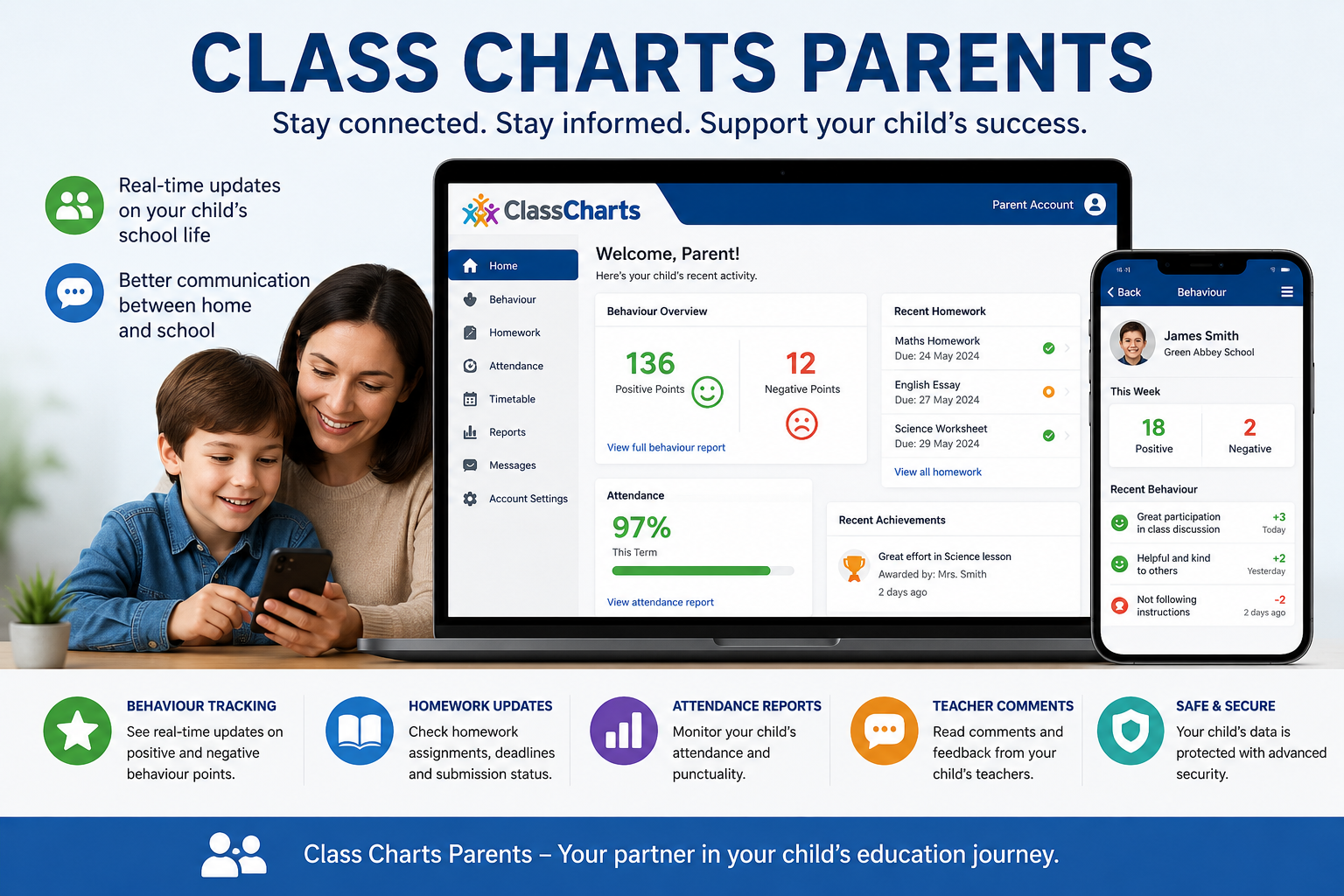
When parents log into Class Charts, they are presented with a personalised view of their child’s school life. This includes updates on behaviour points, teacher comments, homework assignments, and sometimes attendance records. The system is designed to be simple enough for everyday use while still detailed enough to provide meaningful insights.
The reason Class Charts has become so widely adopted is its ability to Class Charts Parents turn complex classroom interactions into understandable information. Instead of relying on occasional parent-teacher meetings, parents can now stay informed continuously.
Role of Parents in the Class Charts Ecosystem
In the Class Charts system, parents play a crucial role in reinforcing school efforts at home. The platform is not just a reporting tool; it is a communication bridge. When parents regularly check updates, they become more aware of patterns in behaviour and Class Charts Parents performance, which allows them to respond early if needed.
The involvement of parents also helps students feel more accountable. When children know that their progress is being monitored collaboratively by both teachers and parents, they tend to become more conscious of their Class Charts Parents actions and academic responsibilities. This shared responsibility is one of the strongest advantages of Class Charts parents integration.
Key Benefits of Class Charts for Parents
The rise of digital education tools has introduced many platforms, but Class Charts stands out because of its practical benefits for families. It does not overwhelm parents with unnecessary complexity but instead focuses on clarity, transparency, Class Charts Parents and real-time updates.
Real-time Behaviour Insights
One of the most valuable aspects of Class Charts is its behaviour tracking system. Parents can see how their child behaves in different classroom situations almost immediately after it is recorded by teachers. This includes both positive behaviours, such as Class Charts Parents participation and effort, as well as negative behaviours like disruption or lack of focus.
This real-time visibility helps parents understand patterns that might otherwise go unnoticed. For example, if a child consistently receives positive feedback in certain subjects but struggles in others, parents can identify this trend early and take supportive action at home.
Instead of waiting for end-of-term reports, parents gain continuous insight into Class Charts Parents daily school life. This allows for more timely discussions with children about their behaviour and choices.
Academic Progress Tracking
While Class Charts is often associated with behaviour management, it also plays a Class Charts Parents significant role in academic tracking. Parents can view homework assignments, completion status, and sometimes teacher feedback related to academic tasks.
This helps parents stay involved in their child’s learning process without needing to constantly contact teachers. It also encourages students to stay organised because they know their assignments are visible to both teachers and parents.
Over time, this level of transparency contributes to improved academic Class Charts Parents discipline. Students develop a clearer understanding of expectations, while parents are able to provide guidance based on accurate and up-to-date information.
Communication Enhancement
Another important benefit of Class Charts parents usage is improved communication between schools and families. Instead of relying solely on traditional communication methods, such as letters or scheduled meetings, parents receive structured digital updates.
This creates a more efficient communication flow where concerns can be identified earlier Class Charts Parents and addressed more effectively. Teachers can also use the platform to highlight positive behaviour, ensuring that communication is not only problem-focused but also encouraging and supportive.
How Parents Use Class Charts Effectively
Understanding how to use Class Charts is essential for parents who want to Class Charts Parents make the most of the platform. While the system is designed to be user-friendly, its real value comes from consistent and informed usage.
Account Setup and Login Experience
The first step for parents is account setup, which is usually provided by the school. Once registered, parents receive login credentials that allow them to access their child’s profile. The login process is designed to be straightforward, ensuring that even those who Class Charts Parents are not highly tech-savvy can use the system comfortably.
After logging in, parents are taken to a personalised dashboard. This dashboard is the central hub for all updates and information related to their child. It is structured in a way that highlights the most recent activity first, ensuring that important updates are not missed.
Navigating the Dashboard
The dashboard experience in Class Charts is designed around simplicity and clarity. Parents can quickly see behaviour updates, homework assignments, and teacher comments in one place. Each section is updated in real time, which helps Class Charts Parents ensure that the information is always current.
The design of the dashboard reflects the platform’s main goal, which is to reduce confusion and make school communication more accessible. Instead of navigating multiple systems or waiting for printed reports, parents can rely on a single platform for consistent updates.
Understanding Behaviour Points and Reports
A key feature of Class Charts is its behaviour points system. Teachers assign points based on student actions, which can be positive or negative. Positive points are awarded for good behaviour, participation, and effort, while negative points may be assigned for Class Charts Parents disruptive or unproductive behaviour.
For parents, understanding this system is important. It is not meant to label children but rather to provide a structured overview of classroom behaviour patterns. When viewed over time, these points help parents and teachers identify trends and work together to support the student.
Regular monitoring of behaviour reports allows parents to engage in meaningful Class Charts Parents conversations with their children. Instead of asking general questions about school, they can refer to specific events or patterns shown in the system.
Homework and Assignment Monitoring
Homework tracking is another essential feature for parents using Class Charts. Assignments posted by teachers are visible within the platform, along with deadlines and completion status.
This helps parents ensure that their children are keeping up with academic responsibilities. It also reduces the likelihood of missed assignments, as both students and parents can see upcoming tasks clearly.
By regularly checking homework updates, parents can support better time management habits at home. This creates a structured learning environment that reinforces school expectations.
Class Charts and Student Behaviour Management
Behaviour management is one of the core functions of Class Charts, and it plays a major role in how parents engage with the system. The platform is designed to encourage positive behaviour while also providing transparency about areas that need improvement.
Positive Reinforcement System
One of the strengths of Class Charts is its focus on positive reinforcement. Instead of only tracking negative behaviour, the system highlights achievements and good conduct. This helps create a balanced view of the student’s school experience.
For parents, this means they can celebrate their child’s successes as well as address challenges. When children receive recognition for positive behaviour, it also strengthens motivation and confidence.
Behaviour Tracking Transparency
Transparency is central to the Class Charts system. Parents are not left in the dark about what happens in school. Instead, they receive a clear and structured overview of behavioural patterns.
This transparency helps build trust between schools and families. It also reduces misunderstandings, as parents can see the context behind teacher feedback and behavioural reports.
Role of Teachers and Schools in Class Charts
While Class Charts parents usage is important, the platform is equally dependent on teachers and schools who input and manage the data.
Data Entry and Monitoring
Teachers are responsible for recording behaviour points, updating homework assignments, and providing feedback. This ensures that the information parents see is accurate and timely.
Schools also use aggregated data to monitor overall classroom trends and identify areas where students may need additional support. This helps improve teaching strategies and classroom management techniques.
Communication Flow Between Teachers and Parents
Class Charts creates a structured communication flow between teachers and parents. Instead of relying on occasional meetings or informal communication, both parties have access to consistent and shared information.
This improves collaboration and ensures that everyone involved in the child’s education is working from the same understanding.
Challenges Parents May Face
Although Class Charts offers many benefits, parents may sometimes encounter challenges while using the platform.
Technical Difficulties
Some parents may initially struggle with logging in or navigating the system, especially if they are not familiar with digital platforms. However, most schools provide guidance to help resolve these issues.
Understanding Behaviour Metrics
Another challenge is interpreting behaviour data correctly. Without proper context, parents might misread patterns or become overly concerned about minor issues. It is important to view the data as part of a broader picture rather than isolated incidents.
Engagement Consistency
One of the most common challenges is maintaining consistent engagement. While the platform is easy to access, parents may forget to check it regularly. However, consistent use is what makes the system truly effective.
Best Practices for Parents Using Class Charts
To gain the most value from Class Charts parents should adopt a consistent and supportive approach. Regular engagement with the platform helps ensure that information is used constructively rather than reactively.
Parents benefit most when they use the platform as a conversation starter with their children. Discussing updates calmly and constructively helps build trust and encourages children to reflect on their behaviour and performance.
It is also important for parents to focus on patterns rather than isolated events. Looking at trends over time provides a more accurate understanding of a child’s progress and challenges. This balanced perspective helps avoid unnecessary stress and encourages more meaningful support at home.
Impact of Class Charts on Modern Education
Class Charts has had a significant impact on how schools, parents, and students interact in modern education systems. It has introduced a new level of transparency and accountability that was previously difficult to achieve.
Digital Transformation in Schools
The adoption of platforms like Class Charts represents a broader shift toward digital transformation in education. Schools are increasingly using technology to streamline communication, improve efficiency, and enhance student outcomes.
This transformation allows teachers to focus more on teaching and less on administrative communication, while parents benefit from faster and clearer updates.
Strengthening Parent-School Relationships
One of the most important outcomes of Class Charts is the strengthening of relationships between parents and schools. When both parties have access to the same information, collaboration becomes more natural and effective.
This shared understanding helps create a supportive environment where students can thrive academically and socially.
Future of Platforms Like Class Charts
As education technology continues to evolve, platforms like Class Charts are expected to become even more advanced and personalised.
AI and Personalised Learning
Future developments may include more intelligent systems that analyse student behaviour and performance to provide personalised insights. This could help parents understand not only what is happening but also why it is happening.
Expanding Parental Involvement
In the future, parental involvement is likely to become even more integrated into digital education platforms. Class Charts parents usage may expand to include more interactive features that allow parents to engage more directly with teachers and learning processes.
Conclusion
Class Charts has transformed the way parents interact with schools by providing real-time access to academic and behavioural information. It has created a more transparent, connected, and collaborative education environment where parents can actively support their child’s development.
The value of Class Charts parents lies not only in its technology but in the way it strengthens relationships between home and school. By offering clear insights into behaviour, academic progress, and classroom activity, it empowers parents to take a more informed and supportive role in their child’s education.
As digital education continues to grow, platforms like Class Charts will remain essential tools for improving communication, enhancing student outcomes, and building stronger educational communities.
Leave a Reply